
WORKING WITH OUR NON-OPERATED JOINT VENTURE PARTNERS
AWE recognises that the selection of joint venture partners, particularly where AWE is not the operator, is a critical part of the success of our participation in oil and gas projects. AWE’s exposure to adverse outcomes in relation to operational and HSE performance is materially reduced by ensuring that we partner with experienced and capable operators. The joint venture operator contractually takes full operational control over the activities of the joint venture and has responsibility for the management of the joint venture facilities and sites. However, it is vital to AWE’s interests that AWE remains actively involved with the oversight of the management of operations of such ventures.
Before we decide to acquire an equity interest in a joint venture, AWE undertakes a full risk assessment of the joint venture operator addressing all key risk areas, including HSE management systems, environmental management systems, emergency response systems and hazard identification processes. This is to ensure that the systems in place will meet our own standards as well as local legal and regulatory requirements. This philosophy applies regardless of the location and type of project in which AWE participates.
We meet regularly with our joint venture operators to discuss operational risks and performance in relation to HSE, environmental and high hazard risks. |
 |
 |
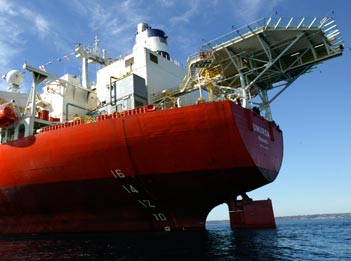
When AWE first developed the Tui Oil Field, Chief Operating Officer/ General Manager New Zealand, Dennis Washer, used his extensive regional contacts to initiate a sharing agreement for procurement services with the other major operators working offshore.
From day one, this initiative has created a common sharing philosophy which has subsequently expanded into other logistic areas including supply vessels, pilotage, warehousing and transportation.
The benefits extend past the financial to include the leveraging of marine information, development of skills and the use of international best practice safety standards.
By sharing helicopter resources for example, the supply company has been able to offer two of the latest generation twin-engined Augusta Westland AW139 for the safe and efficient transport of personnel to and from a number of offshore Taranaki installations.
|
|
|






 Prev
Prev