 ‘Hydraulic fracturing’ or ‘fracture stimulation’ is a proven technology that allows oil and gas producers to safely and effectively recover oil and natural gas trapped in deep shale and other underground formations thousands of meters below ground. A ‘fracture fluid’, which primarily consists of water and sand, is pumped into the well under pressure to make micro-fissures in underground formations that allow any oil or natural gas to flow into the wellbore. Shale rock and tight sand formations are so dense and tightly compacted that fracturing is required to release the trapped hydrocarbons. ‘Hydraulic fracturing’ or ‘fracture stimulation’ is a proven technology that allows oil and gas producers to safely and effectively recover oil and natural gas trapped in deep shale and other underground formations thousands of meters below ground. A ‘fracture fluid’, which primarily consists of water and sand, is pumped into the well under pressure to make micro-fissures in underground formations that allow any oil or natural gas to flow into the wellbore. Shale rock and tight sand formations are so dense and tightly compacted that fracturing is required to release the trapped hydrocarbons.
Fracture stimulation has been used in the North Perth Basin area since the early 1970’s. AWE and its joint venture partners are currently conducting a ‘proof of concept’ test of the shale gas and tight gas potential by fracture stimulating and flow testing three wells in the North Perth Basin (Woodada Deep-1, Senecio-2 and Arrowsmith-2).
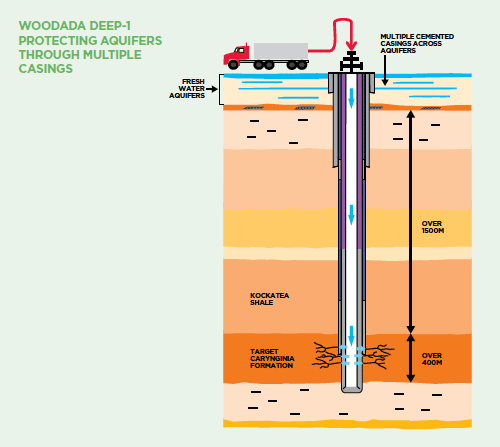
AWE is committed to minimising the environmental impact from its operations; both above and below the ground. Recent commentary and community concern has centred on the potential to impact on the local fresh water aquifers. It is important to note that there are significant natural barriers – in the form of low permeability rock formations – between the shales targeted by AWE and the local aquifers. Additional measures have also been taken in the design and operation of the test program to ensure the water aquifers are protected. All well designs incorporate multiple steel casing barriers that are cemented in place at the depth of the fresh water aquifers and then pressure tested to ensure competency. Furthermore, special pressure measurement equipment is utilised to actively monitor the internal well pressure during fracture stimulation operations.
AWE has carefully selected the fluid to be used during the fracture stimulation process. The fracture fluids consist of ~99.2% water and sand, while the remaining additives are often found in common household products. For more information on additives used please refer to the Material Safety Data Sheets in the Environmental Management Plans posted on AWE’s website www.awexplore.com.
AWE has also conducted environmental impact assessments that take into account the impact that operations may have on local flora, fauna, surface water and land formations. AWE has put in place a number of surface environment protection measures including specially designed retention ponds constructed with heavy duty polymer liners to ensure complete containment of fluids flowed back from the wellbore. These ponds are also fenced to prevent any inadvertent intrusion into the ponds by wildlife. |








 Prev
Prev